COP28 in Dubai, made important progress on establishing support for vulnerable nations and raising awareness about critical issues. However, the urgency of tackling climate change requires even more ambitious commitments and immediate action from all stakeholders.
Temperature Check: The first assessment of progress towards the Paris Agreement’s 1.5°C goal revealed that current efforts are insufficient, with 2023 confirmed as the hottest year on record.
The work at COP28 continues to reinforce the urgency for businesses to act in their own right. Those who move earlier will not only be the most prepared and better able to manage risk, but will likely profit from consumer and public support.
Wins:
- Loss and Damage Fund: A historic agreement was reached to establish a fund to help developing countries address the losses and damages caused by climate change
- Global Stocktake: The first-ever review of countries’ progress under the Paris AgreementThe Paris Agreement is a legally binding international treaty on climate change. It was adopted by 196 Parties at COP 21 in Paris, on 12 December 2015 and entered into force on 4 November 2016. Its goal is to limit global warming to well below 2, preferably to 1.5 degrees Celsius, compared to pre-industrial levels. The Paris Agreement works on a 5- year cycle of increasingly ambitious climate action carried out by countries. Countries submit their plans for climate action known as nationally determined contributions (NDCs). confirmed current efforts are insufficient to reach the 1.5°C warming limit. This assessment, though concerning, serves as a crucial motivator for stronger action
- Food Systems Declaration: 134 countries signed a declaration highlighting the urgency of transforming food systems towards sustainability and climate resilience
- Nuclear Energy Boost: 22 countries pledged to triple their nuclear power capacity by 2050, aiming for a cleaner energy mix
- Cooling Commitments: 60 countries committed to improving the energy efficiency of air conditioning to tackle greenhouse gas emissions from this sector
- Clean Hydrogen Recognition: 35 countries agreed to recognize clean hydrogen certificates, facilitating its future role in a low-carbon economy
Progress
- Renewables and Energy Efficiency Ministerial Roundtables: Highlighted the urgent need to triple global renewable energy capacity and double the rate of energy efficiency improvements using policy interventions, technology advancements, and financing mechanisms
- Voluntary Carbon Markets: The role of voluntary markets in supplementing compliance markets was debated. Concerns about double counting and greenwashing were raised, necessitating robust accounting and verification systems
Challenges:
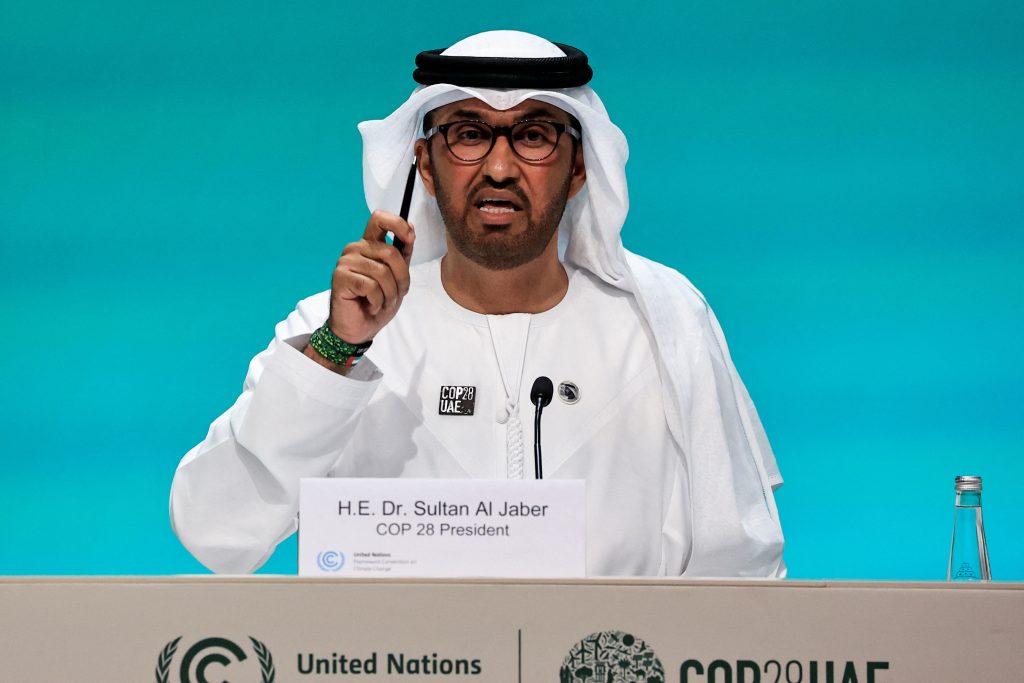
- Jaber’s Appointment: Sultan al-Jaber, CEO of UAE’s state oil company, faced criticism for leading COP28 due to potential conflicts of interest
- Fossil Fuel Influence: Oil companies’ commitments were deemed insufficient by many, as continued reliance on fossil fuels threatens climate goals
- Final Declaration Compromise: While a deal was reached, some argue it lacked ambition and concrete action plans
Other Key Points:
- COP28 saw significant private and public finance pledges towards climate action, although the gap between commitments and action remains
- The summit highlighted the urgency of accelerating emissions reductions and adapting to the impacts of climate change
Overall, COP28 delivered some important agreements and commitments, but it also underscored the challenges ahead. The coming years will be crucial for determining whether the world can effectively address the climate crisis.
Additional insights
- UNRIC: Climate: highlights of COP28 - https://www.youtube.com/watch?v=aH86wp_KjVE
- Earth Negotiations Bulletin: Summary Report https://enb.iisd.org/united-arab-emirates-climate-change-conference-cop28-summary