

Global Renewable Energy (& Offsets)
Achieve 100% Renewable Energy Globally
Achieve Net Zero at all sites
High Integrity and Market Transpacency
Retirement proof for annual reports & auditors
What can you achieve?
- Source 100% renewable energy for all international operations
- Align to RE100RE100 is the global corporate renewable energy initiative bringing together large businesses committed to 100% renewable electricity. The members must be influential based on their either their brand, global presence, significant energy use or other characteristics that bring attention to their commitment. All companies must commit to purchasing 100% of their electricity from renewable sources by 2050 and purchase that power in the same location they are using it. Interim targets are 60% by 2030 and 90% by 2040. The program is led by the Climate Group in partnership with the CDP. More (100% Renewable Energy)
- Deliver on Science Based Targets Initiative (SBTiScience Based Targets initiative)
- Achieve Australian Climate Active accreditation
- Meet 100% Greenpower in Australia
- Meet Australian Safeguard Obligations
- Achieve Scope 1, 2 and 3 emissions reduction targets
Northmore Gordon
- sources RECsI-RECs, GOs, TIGRs, LGCs, ZNECs, J-Credits and offsets in more than 50 regions
- has offices in Australian and Singapore
- has registered over 6 millions EACs over 10 years
- holds Certificate registry accounts across the major markets
- registers RECs and Carbon Credits from projects
- has a global trading network through Singapore office
- provides flexible volumes for coverage across most countries, as well as small or large operations
Multinationals around the world are using unbundled (decoupled) RECs for Scope 2 and VCUs, VERs, ACCUs, GS, CORCsCarbon dioxide removal certificates where CO2 is physically captured from the atmosphere and stored for a minimum of 50 years. It is a voluntary market certificate created under the Puro.earth standard. to mitigate Scope 1 & 3 emissions. This is the world of Environmental Attribute Certificates (EACs)
An International Renewable Energy Certificate (I-RECInternational Renewable Energy Certificate created under the International REC Standard. More) represents the environmental attribute of 1MWh of renewable electricity and can be purchased to demonstrate renewable energy use at site, reducing the Scope 2 emissions.
- RECs are a rapid, flexible and cost effective way achieve to 100% renewable energy at all your global sites using a proven high integrity market-based mechanism.
- They supplement onsite renewable generation or existing contracting requirements to meet renewable energy targets.
- Choose location and technology specific generation that matches corporate goals and aligns with brand values.
Carbon Credits (or Offsets) represent 1 tonne of avoided or removed CO2e to reduce Scope 1 or Scope 3 emissions. Like RECs they are traded and retired.
What Can We Help You With
Northmore Gordon has global expertise on the Environmental Attribute Certificates. We hold RECRenewable Energy Certificate and Carbon registry accounts across the world and registers RECs and Carbon certificates from client projects. NG office in Singapore provides direct access in the world’s biggest certificate markets.
RECs provide an immediate solution to increasing the percentage of renewable energy used by an organisation. We make it easy for you to buy unbundled certificates and they can be purchased in almost any market for international operations. Once purchased, this also provides a price comparison against which you can benchmark the cost of doing on-site solar generation.
Buying carbon offsets for hard-to-abate emissions is an important step in a decarbonisation journey. It helps to set an internal price on carbon, hence providing a mechanism to incentivise emissions elsewhere across your organisation. Where feasible businesses can use a carbon price to help drive internal projects such as energy efficiency which save money and emissions at the same time. Internal projects come at high CAPEX, whilst RECs and Carbon offsets come from OPEX budgets.
Using Renewable Energy Certificates (RECs)
When Northmore Gordon registers or purchases RECs we retire them on your behalf. You can then claim the environmental attributes of the equivalent renewable energy generation for your site and promote renewable sector growth. Most standards or conventions require retirement within the market that the energy was consumed. Location-based and Market-based reporting may also need to be considered
Global REC market include; International RECs (I-RECs), Tradable Instruments for Global Renewables (TIGRsTradeable Instrument for Global Renewables (TIGR) Registry is an online platform for tracking and transferring renewable energy certificates (RECS), enabling developers to generate,verify and sell RECs. The registry is run by APX, a US company that provides infrastructure for environmental markets around the world.), New Zealand Energy Certificates (NZECsNew Zealand Energy Certificate System, the Renewable Energy Certificate registry in New Zealand managed by Certified Energy), Guarantees of Origin (GOs), J-Credits in Japan, Large Generation Certificates (LGCs) in Australia, and others. When buying RECs we will guide you through quality considerations such as vintage (year of generation), age of power station, technology type, compliance to standards, and other factors.
Understanding Carbon Credits
Equally Northmore Gordon can register, purchase, and retire carbon offsets on your behalf. Carbon offsets are credits generated by projects that reduce, avoid, or remove greenhouse gas (GHGGreenhouse gases trap heat in the atmosphere. They all have different global warming potentials (GWP) over different time frames, the higher the number, the worse the impact. For simplicity of accounting everything is referenced back to carbon dioxide which has a global warming potential of 1. There are over 200 GHGs listed in the IPCC fifth assessment report, a sample are below. Note that in current carbon accounting standards the 100 year GWP is used. Greenhouse gas 20 year GWP100 year GWPCarbon dioxide CO211Methane CH48428Hydrofluorocarbon HFC-134a37101300Chlorofluorocarbon CFC-1169004660Nitrous Oxide N2O264265Sulfur hexafluoride SF617,50023,500) emissions. Companies buy and retire these credits to offset or mitigate their own emissions. The range of offset project types can include nature based solutions (e.g. forest conservation, replanting), or technology based solutions (e.g. renewable energy, methane capture, waste and wastewater treatment, energy efficiency projects, fuel switching and many others).
Globally, Verified Carbon Standard (VCSVerified Carbon Standard is the program operated by Verra and is the most widely used voluntary greenhouse gas program internationally. Verified Carbon Units (VCUs) are created under the program. More), Gold StandardAccreditation scheme for voluntary carbon offset and renewable energy projects. The tradable instruments are Verified Emission Reductions (VERs). The Gold Standard label can also be applied to CERs and I-RECs where the project meets the Gold Standard requirements around sustainable development and project additionality., and United Nations’ Clean Development Mechanism (CDMA mechanism for non-Annex 1 countries to create carbon credits under the Kyoto protocol and sell those to Annex 1 countries to meet their Kyoto commitments. The tradeable instrument is known as a certified emission reduction (CER). The Kyoto commitment period ended 31 December 2020. The CDM is not formally recognised under the Paris Agreement and all new CERs are classified as provisional as at 1 Jan 2021. There is an expectation that a decision around the future of the CDM will be decided at COP26. There is still demand for CERs in the voluntary markets.) are popular choices. In Australia, the Carbon Farming Initiative (CFIThe Carbon Farming Initiative (CFI) is a voluntary carbon offsets scheme. It is an integral component of the Emissions Reduction Fund and allows land managers to earn carbon credits by changing land use or management practices to store carbon or reduce greenhouse gas emissions.) aka the Emissions Reduction Fund (ERFThe Emissions Reduction Fund is a voluntary scheme that aims to provide incentives for a range of organisations and individuals to adopt new practices and technologies to reduce their emissions.) is used by businesses seeking to offset emissions using Australian Carbon Credits Units (ACCUs).
Interested to know more, please contact Sid Bansal– Corporate Decarbonisation Manager.
RE100 (Renewable Energy 100%) is a global initiative launched by The Climate Group and CDP (formerly the Carbon Disclosure Project) in 2014. It brings together the world’s most influential businesses committed to 100% renewable power. Participating companies pledge to source 100% of their electricity from renewable sources, such as wind, solar, and geothermal, by a specified year.
GreenPower can provide renewable electricity for businesses in Australia. Whilst this can be achieved through energy retailers and PPAs, a simpler option with greater transparency, ease of budgeting, reduced retailer margin and greater control can be achieved through central procurement of Decoupled LGCs (Unbundled) to achieve 100% renewable electricity across all your Australian site. Multiyear contracts can be used to increase the NABERSNational Australian Built Environment Rating System star ratings.
The Science-Based TargetsThe science based targets initiative (SBTi) is a partnership between CDP, the United Nations Global Compact, World Resources Institute (WRI) and the World Wide Fund for Nature (WWF). Targets are considered ‘science-based’ if they are in line with what the latest climate science deems necessary to meet the goals of the Paris Agreement – limiting global warming to well-below 2°C above pre-industrial levels and pursuing efforts to limit warming to 1.5°C. SBTi has specific sectoral guidance and is working on a Net-Zero standard. initiative (SBTi) supports companies in setting greenhouse gas emission reduction targets in line with the latest climate science. SBTi also offers guidance and resources to help companies achieve their targets.
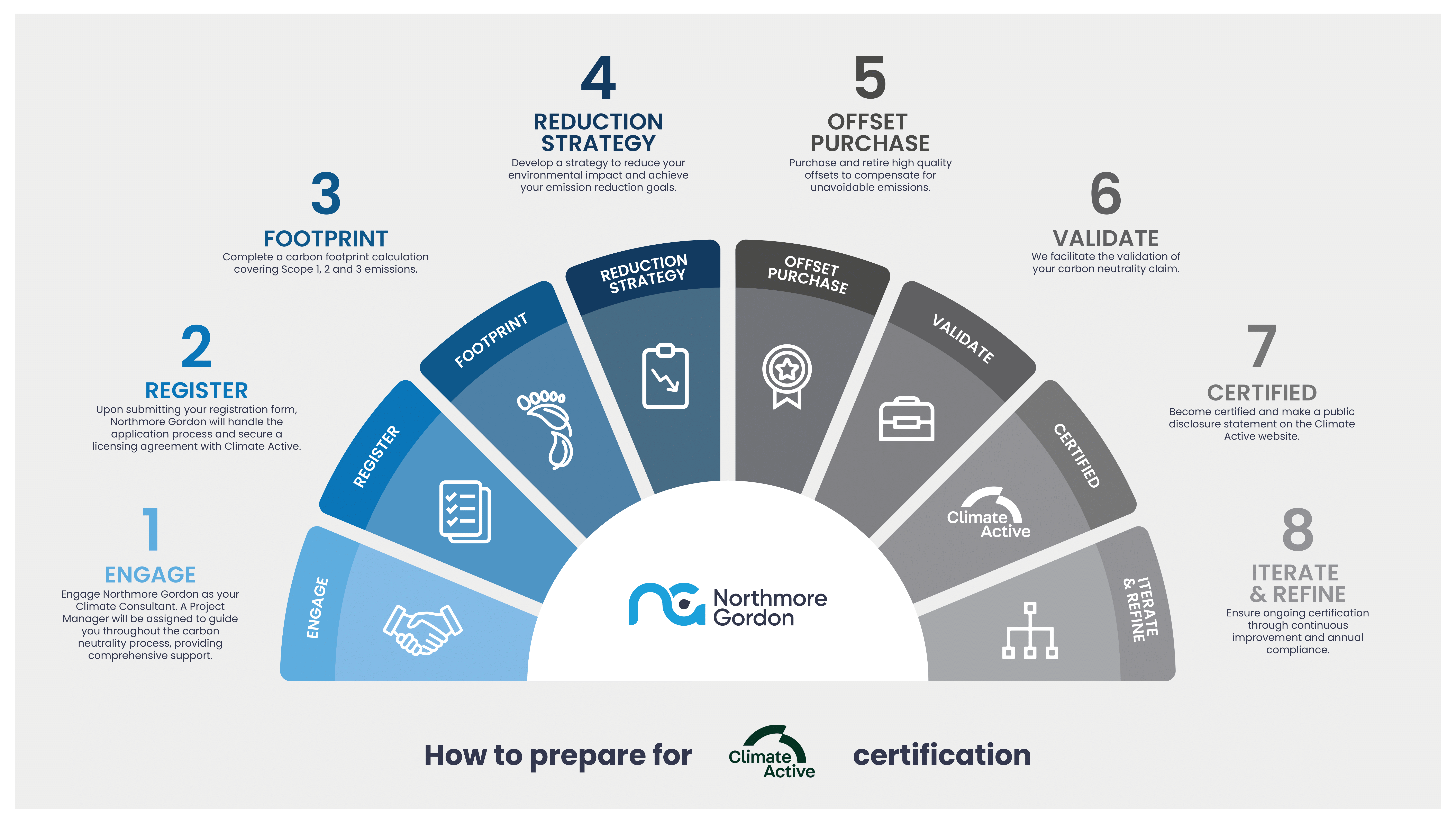
Climate ActiveClimate Active is an accreditation program for Australian companies to certify their organisations, products, services, events, buildings or precincts as carbon neutral. The program is backed and administered by the Australian government. Companies have to measure their scope 1, 2 and material scope 3 emissions, reduce where possible and offset the remainder by purchasing and retiring offsets. Allowed offsets are LGCs for scope 2 and ACCUs, CERs, RMUs, VCUs or VERs for scope 1 or 3 emissions. Annual reporting is required and published on the Climate Active website. More is an Australian Government program supporting national climate policy by encouraging voluntary climate action among businesses. It awards certification to businesses achieving carbon neutrality within a specific emissions boundary. This is achieved through emissions reduction projects and sourcing EACs.
The Australian Safeguard Mechanism is a policy designed to limit national greenhouse gas emissions. It requires large emitters to keep their emissions within baseline levels or compensate for excess emissions. EACs can be used to meet the shortfall and achieve compliance.
The Greenhouse Gas (GHG) Protocol is a global standard framework for measuring and managing greenhouse gas (GHG) emissions from private and public sector operations, value chains, and mitigation actions. It provides tools and guidance to calculate, report, and reduce emissions, helping organizations to understand their carbon footprint and to take action towards climate change mitigation.
The quality of RECs and Carbon Credits varies. A credible REC or Offset (such as LGCs, I-RECs, some VCUs, and ACCUs) is issued under a trusted certification body (e.g. Evident for I-RECs and the CER for LGCs) and represents renewable energy that is additional (i.e., the energy wouldn’t have been generated without the incentive provided by the REC).
Carbon Offsets have come under criticism; High-quality offsets are transparent, verifiable, permanent, and provide additional carbon reductions that wouldn’t have happened without the offset project. They should be certified by reputable standard-setters like VCS or Gold Standard, which ensure the environmental integrity of the project and the offset. Today rating agencies (such as BeZero, Calyx, Sylvera, and IDEAcarbon) now exist for Carbon Credits and RECs.
Northmore Gordon will help you develop and apply your carbon offsetting principles.
- The Oxford Principles for Net Zero Aligned Carbon Offsetting (the “Oxford Offsetting Principles”) outline how carbon offsetting should be approached to help achieve net zero emissions globally
- Reduce first
– Principle 1A is to ‘Prioritise reducing your direct and indirect emissions’
– Minimise the need for offsetting
– Reducing emissions has multiple co-benefits and there are limits to the availability of high-quality credits
- Quality
– Principle 1B is to ‘Ensure the integrity of carbon credits’
– Carbon credits must be measured, reported, verified, and correctly accounted for.
– Credit-generating investments must yield results that are demonstrably additional to what would otherwise have occurred, have a low risk of reversal, and avoid negative impacts on people and the environment
- Transparency
– Principle 1C is to ‘Maintain transparency’
– Disclose current emissions, accounting and verification practices, targets and transition plans to reach net zero, and the type of credits you employ, as well as your selection process and the verification processes associated with the credits
- Developing your strategy over time
The Oxford Offsetting Principles look beyond the above first steps to a longer term strategy where a company should:
– Transition to carbon removal offsetting for any residual emissions by the global net zero target date
– Shift to Removals with durable storage (low risk of reversal) to compensate any residual emissions by the next zero target date
– Support the development of innovative and integrated approaches to achieving net zero
Northmore Gordon provides full transparency of the RECs or Offsets retired on the beneficiaries behalf. NG will provide:
- A signed statement of retirement
- An extract from the registry showing quantity, vintage, project, technology
- For those registries that allow a public URL can be provided from the registry showing the retirement and the beneficiaries details.
Climate Active Process



Get a Quote
Please fill out the form below if you are interested in getting a quote.