

VEECVictorian Energy Efficiency Certificate prices have risen dramatically since 2020, when certificates were priced at $30, at that time lighting was still the bulk of the upgrades, and the government set increasing targets (6.5M growing to 7.3M by 2025) along with a declining emissions factor. This mean more MWh of electricity savings are now represented by one VEEC. Increased demand and reduce supply led to price inflation over the past five years. In response, and as part of the strategic review, the government to announce plans for an overhaul of the VEUVictorian Energy Upgrades is a Victorian government energy efficiency program that gives every Victorian household and business the opportunity to receive rebates or discounts on energy saving products. program, with the aim of easing cost pressures and ensuring the program is sustainable into the future.
Proposed changes include extending the program’s timeline to 2045 and relaxing the time limits for certificate validation which could release more certificates into the market and help bring prices down. There has been an ongoing discussion regarding how the VEEC price will be affected in the coming months, while there is still room for increases in price, there is growing downside risk on prices that could see the wholesale VEEC price fall back from current highs, potentially suddenly.
Managing Your Risk
The VEU is a market-based incentive program and as such there can be volatility in the market. The graph showcases how the VEEC prices can suddenly drop following any government announcements.
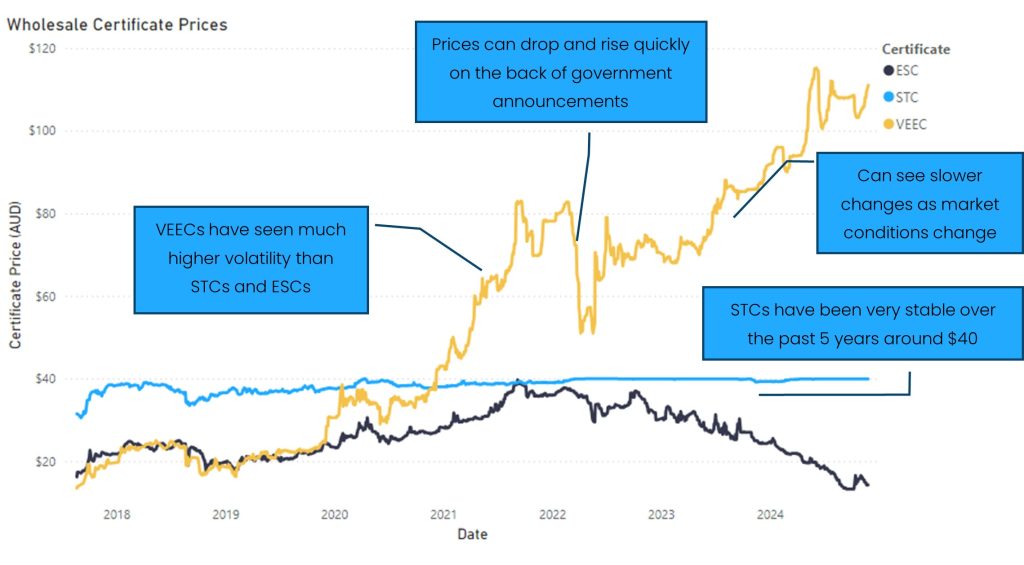
Looking at 3 different market-based incentive programs – Victorian Energy Upgrades Program (VEECs), NSW Energy SavingsElectricity or gas savings or both. Scheme (ESCs), and the Small-Scale Renewable Energy Target (STCsSmall-scale Technology Certificate under the Australian Renewable Energy Target. More), you can see that the government policy and market conditions have led to 3 very different outcomes in certificate pricing over the past 6 years
What Steps can you Take?
- Complete the paperwork and submit your jobs for processing as soon after installation as possible and respond to pending RFI’s quickly to reduce the time job claims are outstanding.
- Check our spot price newsletter issued every Monday and Wednesday so you are aware of any market changes – if you are not receiving this, please let us know.
- Regularly review the incentive amounts that you are offering to your customers and keep a buffer for yourself, so you are not caught short.
- Talk to us about hedging or forward contracting if this is the right option for you. This allows you to lock in the price for a set amount of VEECs to be delivered in an agreed period of time.
- Consider other activities for additional submissions to diversify your product and service offerings to customers.
Key Factors That Influence Certificate Prices
The Environmental Certificate Program operates on a market-based model, requiring electricity retailers to purchase millions of certificates annually. By removing the strict timeline for certificate validation, the government hopes to increase the supply of certificates, which could relieve some of the price pressures. However, this will only have a margin impact on VEEC price through changing the timing, not the overall quantity of certificates available.
Supply and Demand: the demand for certificates by retailers is set by the annual government targets. The targets are set in 5-year blocks, with the current targets set to the end of 2025. The government has announced that they will set an interim target for 2026 and 2027, while the VEU Strategic review is undertaken. The 2026 and 2027 targets need to be announced by May 2025, however, could be announced earlier. While the target was growing each year in the 2020 to 2025 period, there is a possibility that the government could set a lower target for 2026-2027 which would put downward pressure on pricing by reducing the demand. Supply of certificates is also determined by the government by setting the allowable activities and setting the number of VEECs each activity will produce. Bringing new activities to the program could increase the supply of certificates and reduce the price.
Stronger Regulatory Oversight: Planned reforms also include giving the Essential Services Commission greater authority to regulate appliance installers. While this increased oversight is aimed at ensuring compliance and preventing fraud, it may also slow down the generation of new certificates if installers face additional regulatory hurdles.
Political and Economic Pressures: The debate surrounding the VEU program is highly polarized. Critics argue that the scheme is unfairly driving up costs for low-income households at a time of economic difficulty, while supporters maintain that it has successfully reduced power bills, distribution infrastructure costs, and the upfront cost for many energy-efficiency upgrades. How the government balances these competing concerns will significantly affect the future pricing of VEECs.
What Can We Expect Moving Forward?
While the current wholesale price of VEECs remains high at $105-$114 per certificate, the upcoming reforms are expected to create more activities into the future and potentially lower prices over time. The increase in certificate supply, combined with improved regulatory oversight, could provide some relief to both consumers and electricity retailers. However, it remains uncertain how significant these price reductions will be and how long they will take to materialize.
With the VEU program now extended to 2045, businesses and consumers can plan for long-term participation in a more refined and efficient system. The key will be to monitor the ongoing review and regulatory changes closely, as these will ultimately shape the Future landscape of Energy efficiency in Victoria.
In conclusion, while VEEC prices are currently high, upcoming reforms have the potential to bring them down gradually (or suddenly). Stakeholders should prepare for a period of transition and keep a close eye on legislative developments as the Victorian government seeks to leverage this critical emissions reduction program as part of the government electrification strategy.