About Bulla
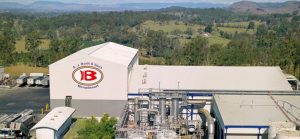
Regal Cream Products Pty Ltd trading as Bulla Dairy Foods is an Australian owned and operated company, manufacturing chilled and frozen dairy products including cream, yogurt, sour cream, cottage cheese and ice cream.
Operations take place at five sites in Victoria – Forest Street in Colac, Connor Street in Colac, Mulgrave, Dandenong and Derrimut. A significant quantity of energy is used in the form of electricity, gas, hot water, steam, chilled water, and compressed air. Energy using equipment includes steam boilers, air compressors, vacuum pumps, pumps, cogeneration, chillers, wastewater treatment and various dairy foods production lines.
Project overview
This project is a demonstration of the strong business case for comprehensive but strategic submetering and monitoring of energy and water. Bulla recognises that good metering and monitoring underpins effective energy management and is essential if energy and water waste is to be minimised.
Bulla’s visibility of when, where and how energy and water is used throughout its sites has been limited to boundary billing meters and a small number of submeters. Furthermore, many of the sub-meters that do exist were not networked and/or meter data was not readily accessible/viewable by stakeholders. Consequently, Bulla has developed and implemented a pilot metering system at its Connor Street site in Colac, Victoria.
The project scope included:
- Map existing sub-metering capability and design a metering upgrade plan.
- Specify, source and install meters for all key utilities
(electricity, gas, steam, co-generation, hot water, chilled water, and compressed air). - Select and install a data collection and reporting software platform.
- Streamline routine environmental reporting.
- Provide a tool to ensure that energy and water consumption does not drift over time.
- Provide a tool to track improvements towards water and energy targets.
- In total, 35 existing meters were connected to the new energy management software platform and 27 new meters installed. The site is now able to monitor electricity, gas, water, and steam consumption, as well as electricity and steam generation, and waste production, by key plant areas.
This project was made possible with the assistance of funding from two grants; the Dairy Australia Data Technology Assessment Scheme (Co-funded by Dairy Australia) and Food Innovation Australia Limited) and the Department of Environment, Land, Water and Planning (DELWPDepartment of Environment, Land, Water and Planning) Business Recovery Energy Efficiency Fund (BREEF).
The problem
- Bulla has been unable to evaluate the energy performance of plant services and key processes against industry and internal benchmarks, and unable to observe or react to abnormal energy consumption events.
- Existing processes for extracting and handling energy use and environmental data were manual and relied on spreadsheets and screenshots from the SCADA system.
- Metering can be expensive, especially steam meters.
- Gaps in capacity and in-house expertise.
- There are many energy data software packages on the market, with variations in capability, features, ease ofuse, initial costs, and ongoing costs.
Bulla sought external expertise to support the following project steps:
1. Establish a detailed picture of existing metering capability.
2. Design a master metering plan.
3. Evaluate a range of software platforms against Bulla’s needs.
4. Specify, procure, install, commission and validate meters.
5. Configure software and interface existing and new meters.
6. End-to-end validation of meter data.
7. Fine tune dashboards and reports.
Outsourcing of expertise
A key success factor was the use of energy management specialists Northmore Gordon to design the metering plan, provide guidance on meter technology options and installation requirements, develop criteria for software platform assessment, evaluate software products, and assist with selection of the best option. A specialist vendor was also used to install and commission meters and the software platform.
Use of a dedicated data handling platform Another key project decision was to utilise an advanced centralised and dedicated software platform for collecting, collating, displaying, and reporting energy and water data. The tendering selection process weighed ease-of-use, capacity for in-house customisation, and reporting and alarming functions.
Bulla chose the Schneider ‘Power Monitoring Expert’ platform, implemented by ‘Azzo’. The system can issue alerts for abnormal energy usage or energy performance of equipment and processes. It also has the capacity to hold and report other environmental data. The cloud based platform is very customisable and capable of dashboarding, sending alerts, aggregating data, shadow billing, baselining, identifying missing/corrupt data, reporting (daily, weekly, monthly), KPI tracking, and advanced data visualisation, such as Sankey diagrams and heatmaps.
Key outcomes and learnings
- Metering in and of itself does not directly produce savings – it is the application of the tools, data and operational insights that this project has realised, that will lead to decisions and actions that create savings.
- A metering system needs to be cost-effective, and over-metering avoided.
- The cost of purchasing and installing meters varies greatly depending on type and size. Electricity and water meters are lower cost than gas and steam.
- It is important to choose a meter data software platform that does not constrain growth.
- The cost of expanding an online software platform to other sites is relatively low.
- A modern energy data management system provides more than just numbers and trends. It also provides customisable reports, flags abnormal usage directly to relevant staff, provides insight into energy usage performance under different production conditions (e.g. short versus long production runs, and part load versus full load), aggregates data, performs shadow billing, identifies missing/corrupt data, and provides advanced data visualisation, such as Sankey diagrams
and heatmaps. - Different stakeholder groups have different information needs. Full value is obtained only if the system can be customised to provide insights in a format that suits a range of stakeholder groups; ranging from plant operators to the Board of Directors.
- This project is considered an important element of a robust and productive sustainability program for Bulla.
- Pipework modifications were needed in some areas to optimise the measuring data accuracy by installing meters at a proper location.
Next steps
1. Use the system to identify and realise saving opportunities, which in turn will help Bulla meet its
energy and greenhouse targets under the Australian Dairy Industry Sustainability Framework.
2. Expanding the software to other sites.
3. Progressively invest in more meters to cover all of Bulla’s sites, with a focus on energy intense processes and loads.
For more information contact: c.morgan@northmoregordon.com